
Bathrooms, kitchens, pantries and mudrooms, often described as the “functional” rooms of the home, are usually where decorating quietly takes a back seat. They are viewed as practical, perhaps messy, and sometimes hidden from guests. Investments are understandably directed toward cabinetry, appliances, tile and plumbing fixtures, and by the time those substantial decisions are made, it can feel as though the work is done.
Yet these are the spaces that support the rhythm of daily life.
They hold our morning routines, the rush of after-school hours, the folding of endless laundry, the preparation of meals, and the quiet end-of-day retreat. They are also among the most costly rooms to renovate. For that reason alone, they deserve to be approached with intention from the beginning.
If we are already investing in beautiful hard finishes, why stop there?
When thoughtfully layered, these hardworking rooms can feel just as warm, personal and refined as any living space in the home. Here is how we approach furnishing and decorating them so they feel cohesive, elevated and entirely livable, without ever sacrificing durability.
1. Layering Personality with Art & Collected Details
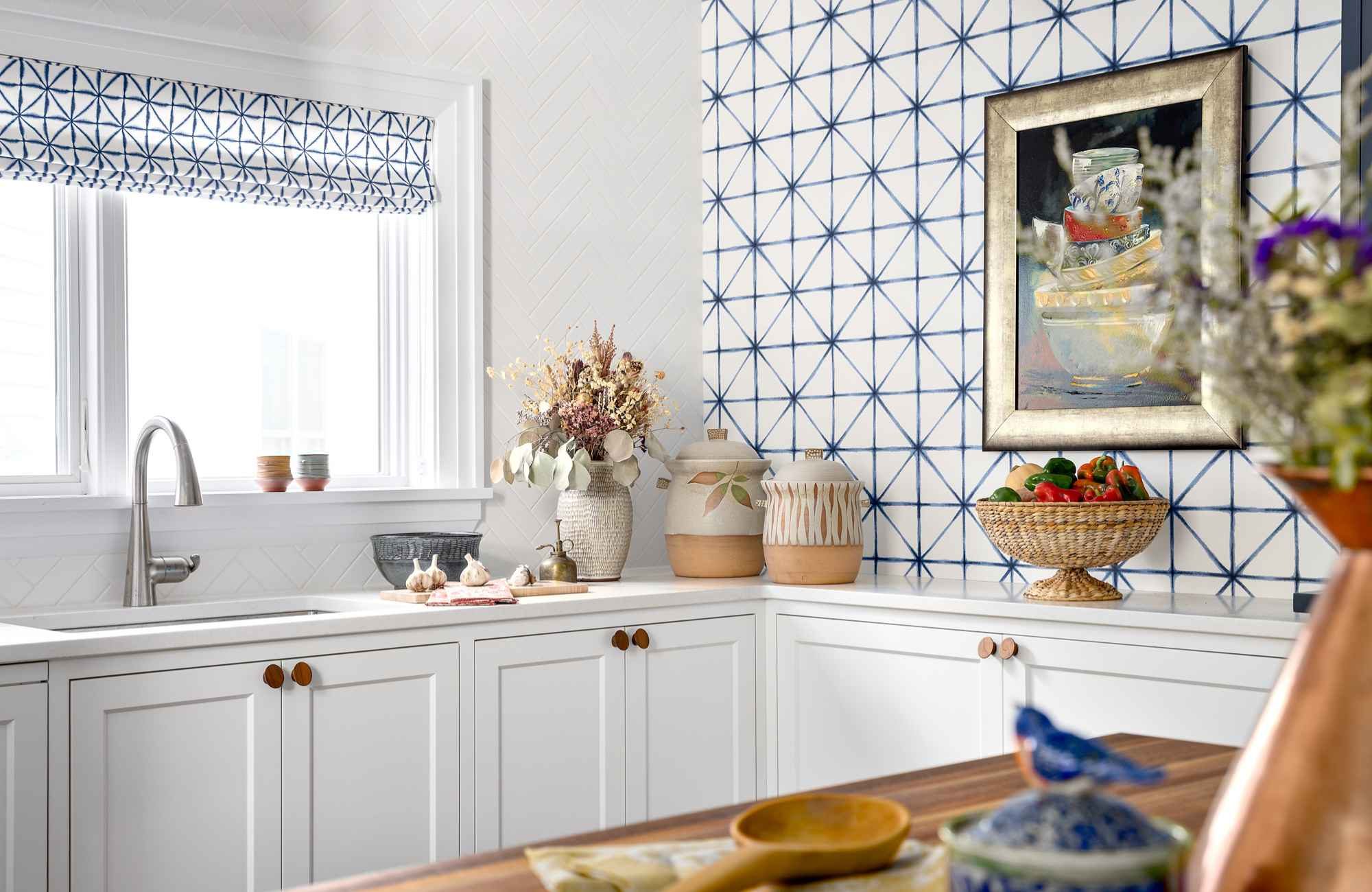
Cabinetry and tile may form the foundation of a kitchen or bathroom, yet it is the layering that makes a space feel complete. Art belongs in every room of the home. Functional spaces are no exception. In our PEI Project, pictured below, the pantry was treated as a destination rather than a pass-through.
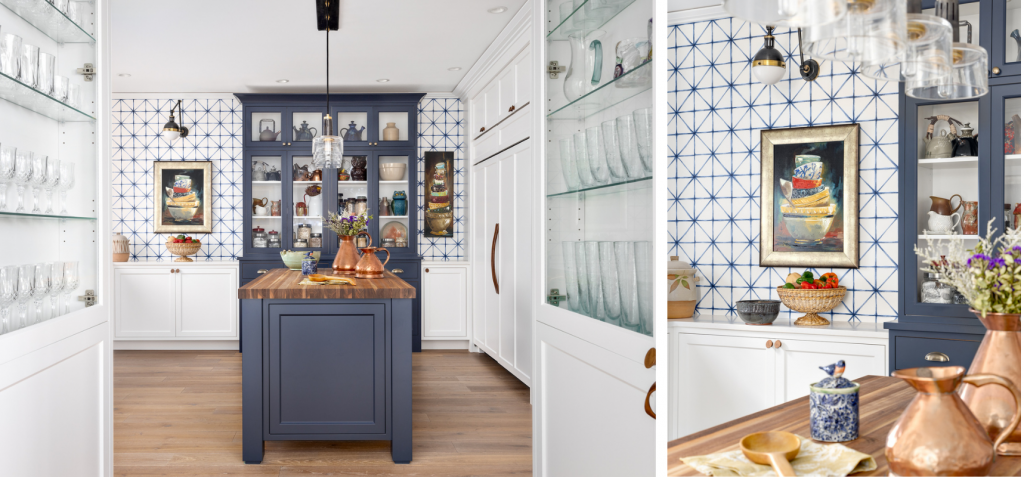
The back wall became a focal point, anchored by colourful artwork that draws you through the kitchen with intention. The patterned wallpaper and millwork establish character, yet it is the art that introduces personality. What could have been a simple storage area becomes a moment.
In the adjoining kitchen, we saw the open shelving along the main island as an opportunity for thoughtful styling.
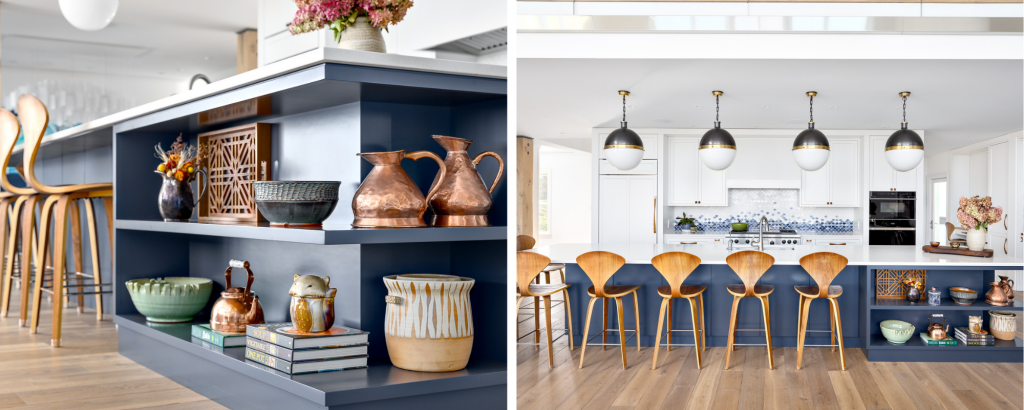
Collected copper vessels, ceramics and stacked books bring warmth and texture against the navy cabinetry. These shelves work hard, yet they feel curated, intentional, and elevated. Decorative objects soften the millwork and add a sense of livable luxury to a space used every single day.
Notice how none of these additions are extravagant. They are deliberate. Every detail carefully considered so the room feels refined yet relaxed rather than purely utilitarian.
2. Using Wallpaper for Warmth & Character
Wallpaper has the power to completely transform any space, and I particularly love using it in functional rooms. In wet areas, we specify vinyl wallpaper for durability. Proper ventilation and thoughtful installation ensure longevity. The goal is not to avoid beauty in moisture-prone spaces, but to curate with intention and choose materials that support how the room is used.
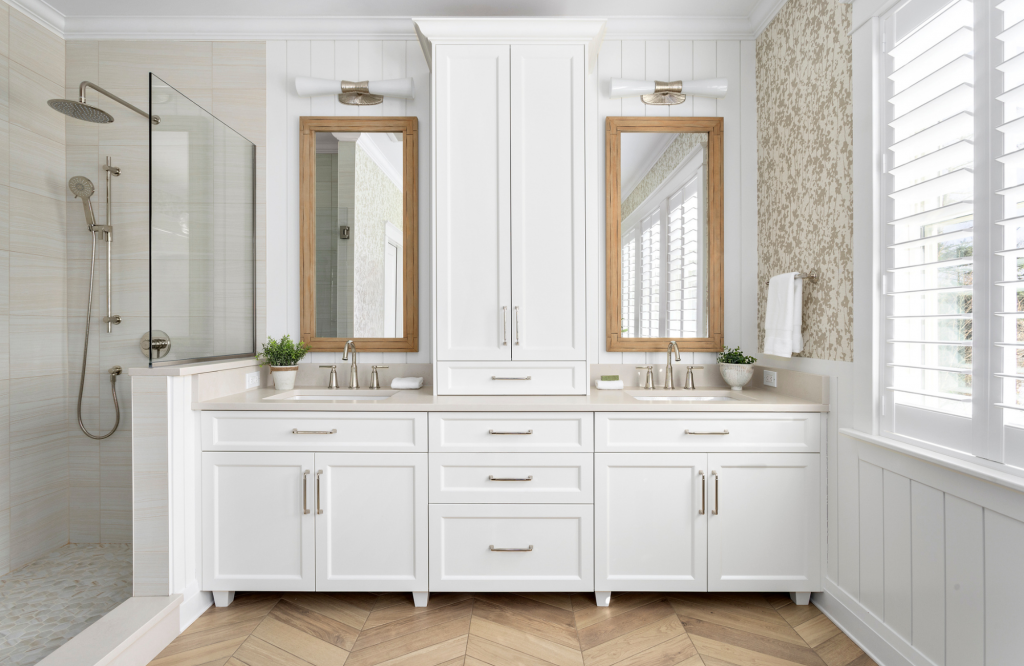
In the primary ensuite of our Newfoundland Project, we introduced wallpaper to soften the crisp white millwork and create visual depth.
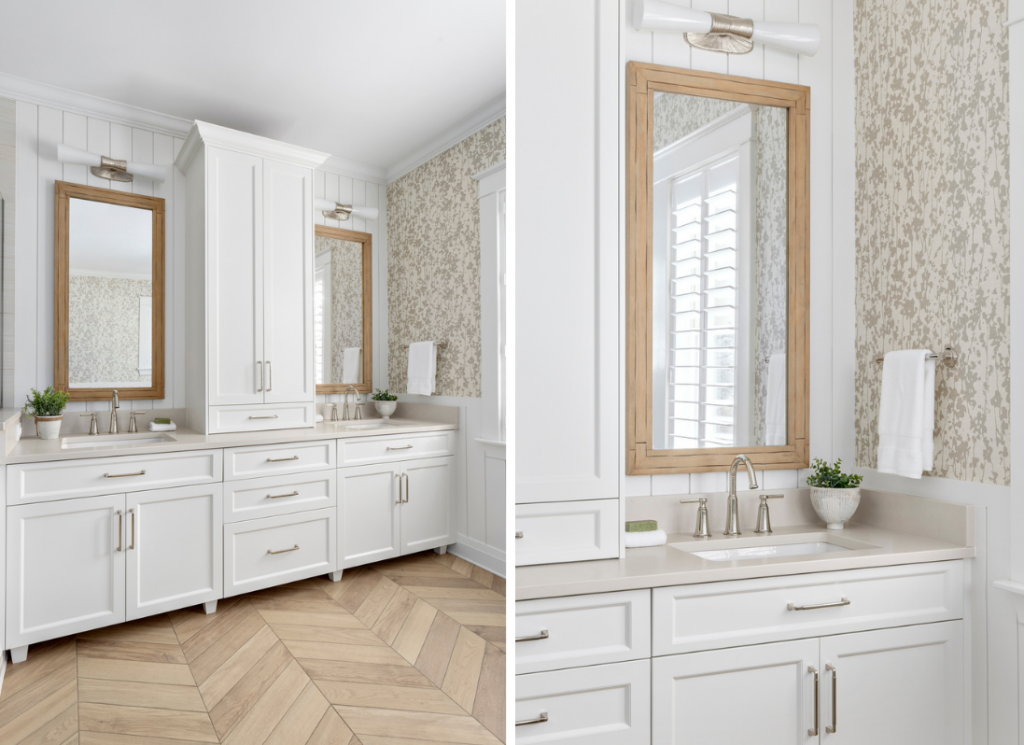
The neutral floral pattern wraps the room gently, adding warmth and character without overwhelming the architecture. This addition makes the space feel layered and inviting rather than bare and clinical. Underfoot, the chevron tile floors resemble wood, bringing movement and subtle pattern and becoming part of the design language. It catches the eye and adds dimension, proving that even the most practical surfaces can double as art.
3. Creating Softness with Area Rugs
There is a long-standing belief that kitchens and bathrooms must be tile-only zones. While durable, that approach can leave these spaces feeling sterile and acoustically harsh. Today’s area rugs are available in durable and washable materials designed specifically for real life. Antique carpets have already withstood decades of use and, when crafted from 100% wool, can tolerate some moisture provided they are allowed to dry properly in a well-ventilated environment.
Additionally, an area rug absorbs sound, introduces texture, and visually grounds the room. It softens hard surfaces and brings a sense of quiet comfort that tile alone cannot achieve.
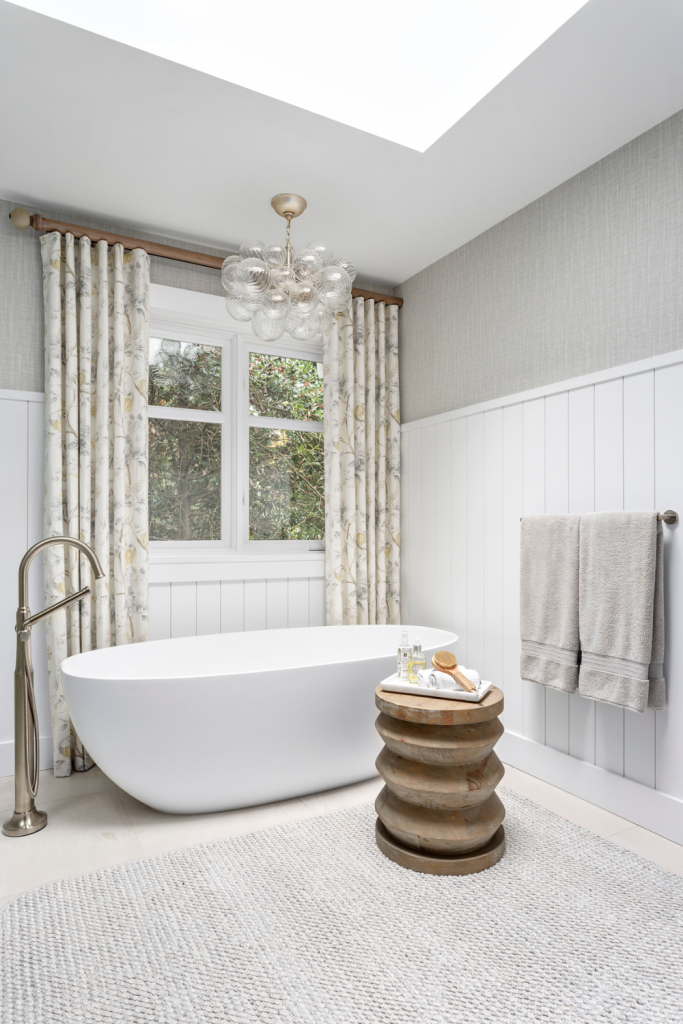
In our West Vancouver Project, pictured above, we layered a soft wool area rug into the primary bathroom just beneath the freestanding tub. The addition instantly shifted the atmosphere. The space no longer felt like a collection of hard finishes. Instead, it began to feel like a retreat, refined yet relaxed, and seamlessly connected to the warmth of the rest of the home.
4. Adding Drapery in Unexpected Places
A primary ensuite is often composed almost entirely of stone, porcelain, glass and lacquered finishes. The materials are beautiful. The craftsmanship is impeccable. Yet without softness, the room can feel more functional than restorative. One of my favourite ways to shift that feeling? Drapery.
Fabric introduces movement, colour and warmth in a way few other elements can. With proper ventilation and thoughtful fabric selection, softness and durability can coexist effortlessly, even in a bathroom.
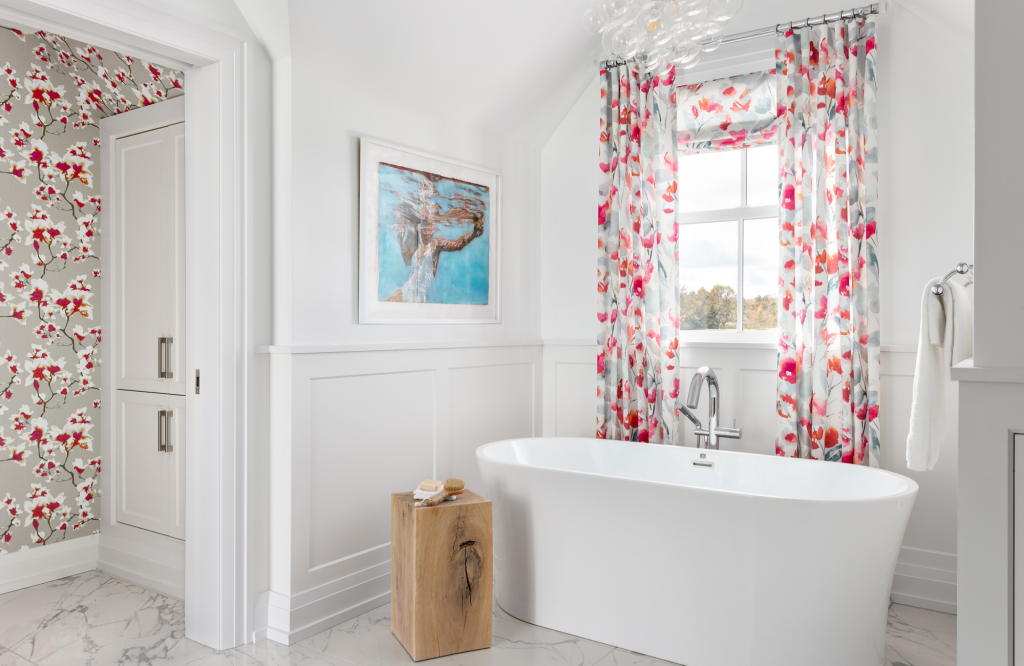
In our PEI Project, pictured above, we incorporated full-height drapery and a tailored Roman shade in a vibrant floral motif. The fabric frames the freestanding tub and draws the eye upward, adding both verticality and personality. Paired with crisp millwork and marble flooring, the drapery softens the architecture and brings a sense of livable luxury to the space.
What makes this space feel truly layered, however, is the combination of elements. The underwater artwork above the tub introduces another moment of colour and personality, while the patterned wallpaper in the adjoining space creates continuity and depth. The result feels less like a room designed purely for function and more like a personalized private retreat.
5. Materials That Withstand Real Life
Functional spaces experience daily wear, from water and humidity to muddy boots and pet paws. Selecting the right materials from the beginning allows us to design rooms that feel elevated without feeling fragile.
Performance fabrics, often referred to as indoor/outdoor textiles, are one of my favourite tools in hardworking spaces. Many can be cleaned with a diluted bleach solution, making them ideal for kitchens, mudrooms and laundry rooms where spills from food, water, pets and children are inevitable. This opens the door to incorporating upholstered benches, cushions and seating in places that might otherwise feel austere.
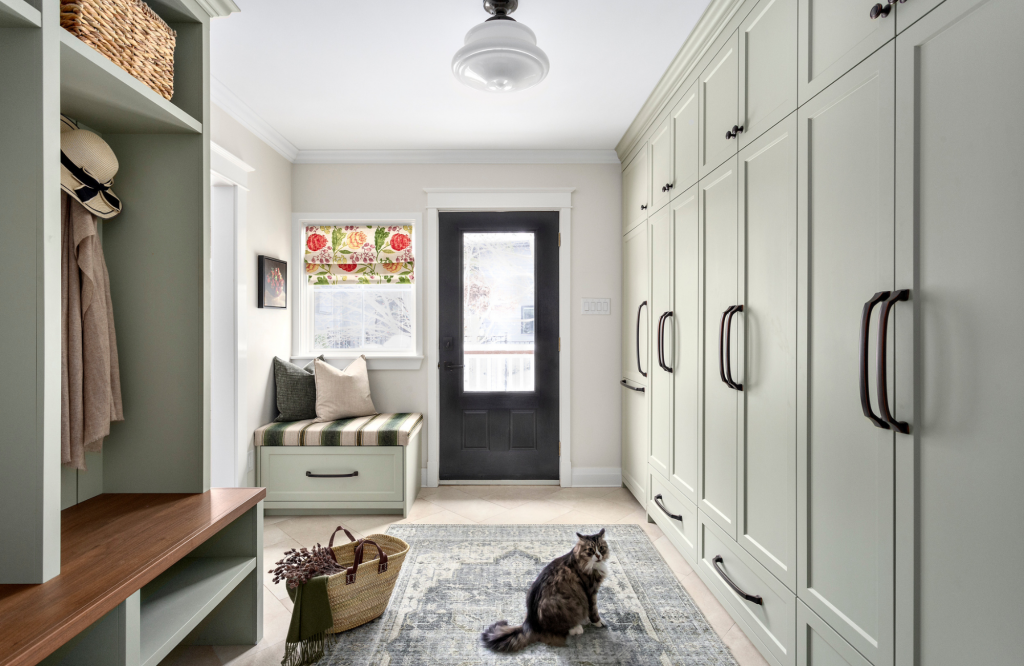
In the Newfoundland mudroom, shown above, durable cabinetry finished in a soft sage provides generous storage while standing up beautifully to daily use. Matte black hardware adds contrast and strength, while the upholstered bench tucked next to the door invites comfort and warmth.
The patterned Roman shade brings colour and personality without sacrificing practicality. Underfoot, a washable area rug softens the tile and absorbs sound, creating a space that feels refined yet relaxed, even on the busiest mornings.
Hard surfaces deserve equal consideration.
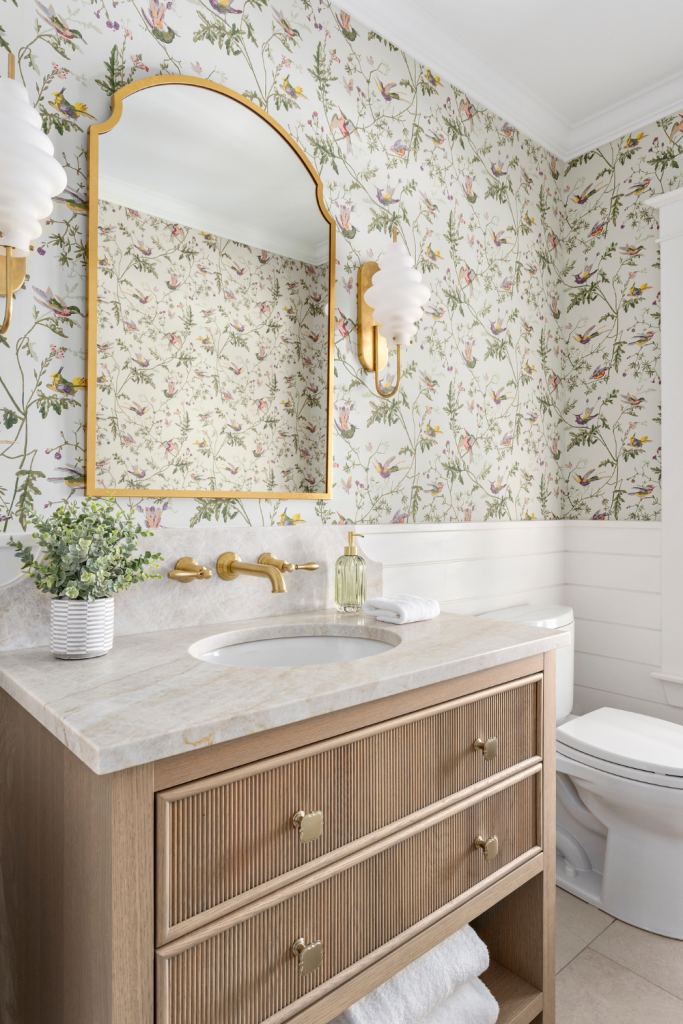
In the powder room pictured above, we designed a vanity that resembles a piece of furniture. The fluted wood detailing adds texture and warmth, elevating the bathroom beyond the purely functional. Beside the mirror, two sculptural light fixtures catch the eye upward and introduce softness through form.
These spaces are proof that when foundational materials are selected wisely, we gain the freedom to layer warmth and personality without hesitation. The result is a home that supports your real life while still feeling beautiful and complete.
Key Points on Decorating Kitchens, Bathrooms & Mudrooms
- Functional spaces deserve the same thoughtful furnishing and layering as living areas.
- Art, decorative objects and collected details bring personality to even the most practical rooms.
- Wallpaper adds warmth and depth, especially when durable materials are specified for moisture-prone areas.
- Area rugs soften hard surfaces, absorb sound and help kitchens and bathrooms feel more connected to the rest of the home.
- Drapery and textiles introduce comfort and visual softness in rooms often dominated by tile and stone.
- Selecting durable materials and performance fabrics ensures these spaces remain both beautiful and practical.
- When every detail is carefully considered, even the most hardworking rooms can feel refined, relaxed and entirely livable.
Every Room Deserves to Feel Like Home
When functional spaces are treated with the same care as living areas, the entire home feels cohesive. After all, livable luxury is not about excess. It is about ensuring that even the rooms where chores happen feel calm, layered and welcoming.
If you would like to reimagine your own home, reach out here. I would be delighted to help you create personal, thoughtfully layered, hardworking spaces that make you feel at ease every single day.
Yours,
Lori